





We opened our recent conversation with Andrea Burda, organizational psychologist and consultant on DB Systel GmbH’s Immersive Technology team, with a simple question for the live audience: when your team gets a new tool, what usually happens first?
The results came back almost evenly split. 40 percent said a few people jump in immediately. 47 percent said most people wait and watch. 13 percent said someone official has to mandate it. Not a single person picked “it gets ignored until someone’s forced to use it.”
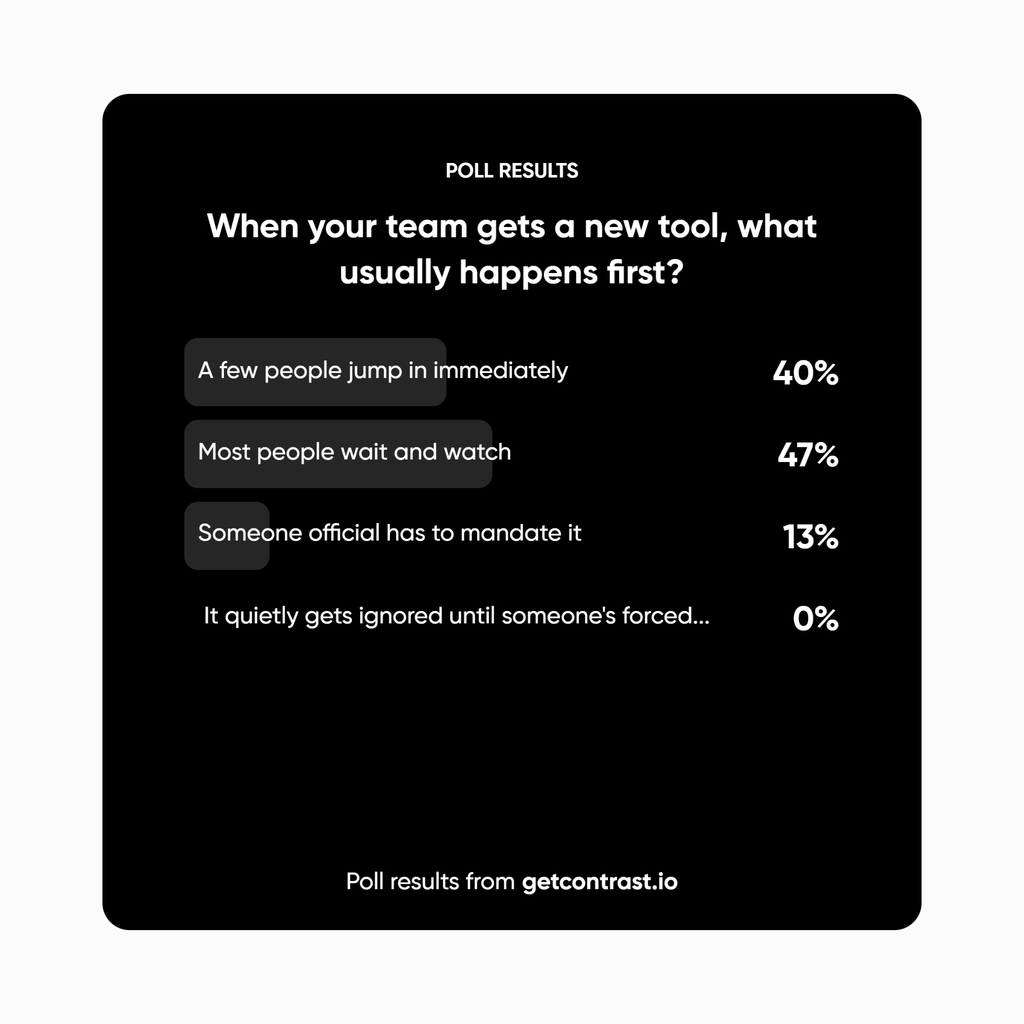
That last number might be the most interesting one. Nobody in the room believed a tool just quietly disappeared. Everybody has watched a rollout stall, or watched one take off, they just disagree on how it usually starts.
To hear Burda’s answers in her own words, watch The Human Side of Digital Transformation on the session page.
Not About Labeling People
A personality framework is an unusual place to start a conversation about enterprise software, but it’s the right one. Andrea Burda leans on the Big Five, the same framework used across organizational psychology more broadly, to make sense of something every rollout runs into: every team is really five teams happening at once, one for each kind of person on it, and treating them all the same is often where the trouble starts.
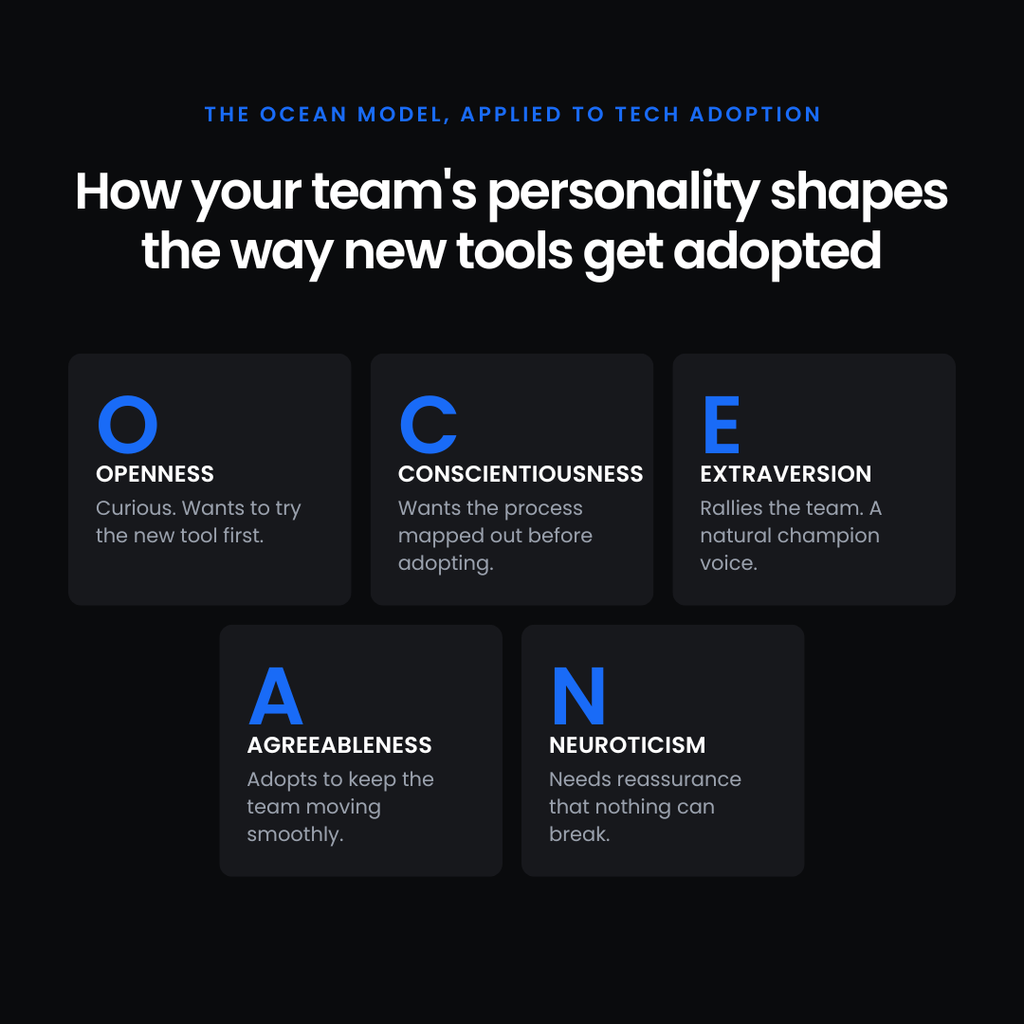
“It’s not really about labeling people, but it’s really to understand reactions to change, to understand what those people need.”
Two groups tend to matter most, and they show up at different points. Early on, it’s the people already asking “can I already click here? Can I try it out?”
Before the demo’s even finished, the natural first movers worth approaching first. Later, and more consequentially, come the detail-oriented skeptics, the ones asking the harder questions that can look like resistance but rarely are.
Prepare for those questions in advance, and “usually those are the biggest fans in the end. They spread the links themselves, then we don’t even have to do the work ourselves.”
That tracks with something an attendee asked live: how do you manage skepticism from colleagues who aren’t used to new technology?
The answer wasn’t about convincing anyone. It was about sitting down with the most skeptical people early, one-on-one, and using their questions to find the gaps before they become everyone else’s objections too.
To hear Burda’s answers in her own words, watch The Human Side of Digital Transformation on the session page.
The Signs You’re Watching a Program, or a Stall
There’s a moment in every rollout where you can already tell which way it’s headed, and it comes down to the kind of questions people start asking.
When the questions turn toward use cases, “could I use it for this? Can I use it for that?”, that’s the tell. It’s a sign the conversation has moved past the technology itself and into something more useful: how it fits into the way people already work.
The opposite pattern is just as recognizable: if people are still stuck on whether it will even load, or whether their laptop can run it, that’s a barrier problem, not a value problem, and there’s more groundwork to do before the tool earns anyone’s trust.
Matching the Capture Method to the Actual Job
Prevu3D and DB Systel have been working together for three and a half years now, long enough to get concrete about how the two technologies at the center of that work actually get chosen.
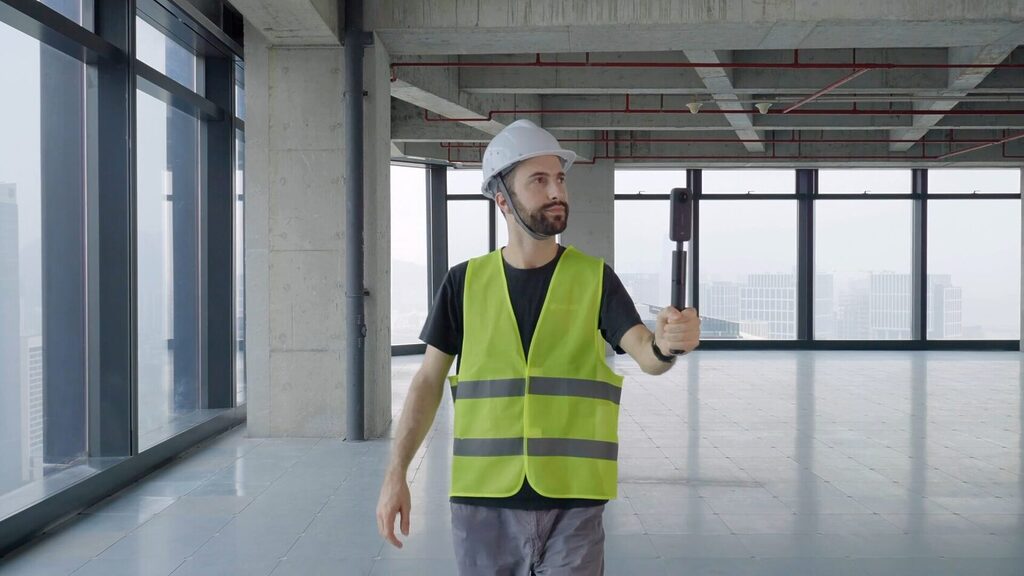
“We don’t skew toward any capturing method. We looked at it also from the value perspective,” meaning the technology gets matched to the problem, not chosen by default. For getting maintenance teams oriented at a station before a visit, 360° capture wins because “it’s quite intuitive, you just look around, people can get familiar with the stations.”
For work requiring precise measurements or geometry, LiDAR earns its place instead.
For more on how the DB x PREVU3D partnership scaled, read the full case study.
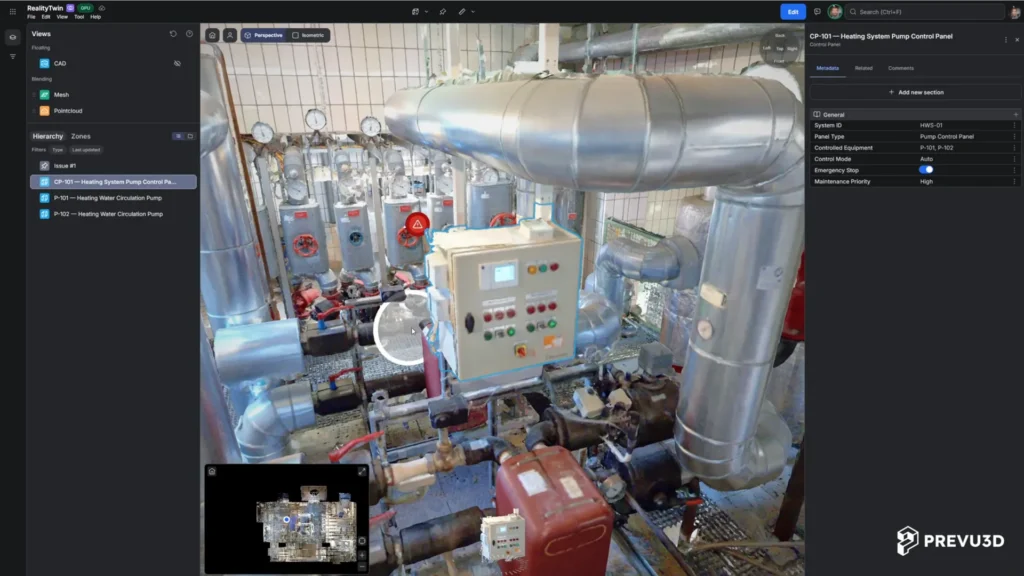
In practice, that looks like a maintenance team reviewing a 360° walkthrough of a station before ever setting foot there, checking safe crossing points, seeing where tracks end, spotting which assets need attention.
Even if there are further questions, we can jump from the 3D model into different links and dig deeper if needed.
An audience question asked what a typical DB Systel project looks like in scan volume, and where the largest one has landed so far. The answer came down to logistics: smaller stations tend to get the 360° treatment, partly because they’re the ones requiring the most travel for maintenance teams to reach, while LiDAR has been used at a much larger scale, without hitting a ceiling yet.
What Leadership Actually Needs to Give This
Ask what leadership can actually do to help a tool get adopted, and the answer isn’t about mandates or top-down pressure.
Getting five different kinds of people comfortable with something new takes longer than a single announcement, and the payoff for that patience shows up later, once most of the early questions have already been answered and the tool has become part of how people already work.
A last audience question raised something worth sitting with: can a team’s personality shift as a project evolves, starting open and optimistic, then turning more cautious later if things fall behind?
The answer was a clear yes. The five traits aren’t fixed positions, they shift as people gain more experience, or more reasons for doubt.
It’s less a personality test and more a live read of where people are, at any given moment in the rollout.
Want the full conversation, including the live audience Q&A? Watch The Human Side of Digital Transformation Webinar.