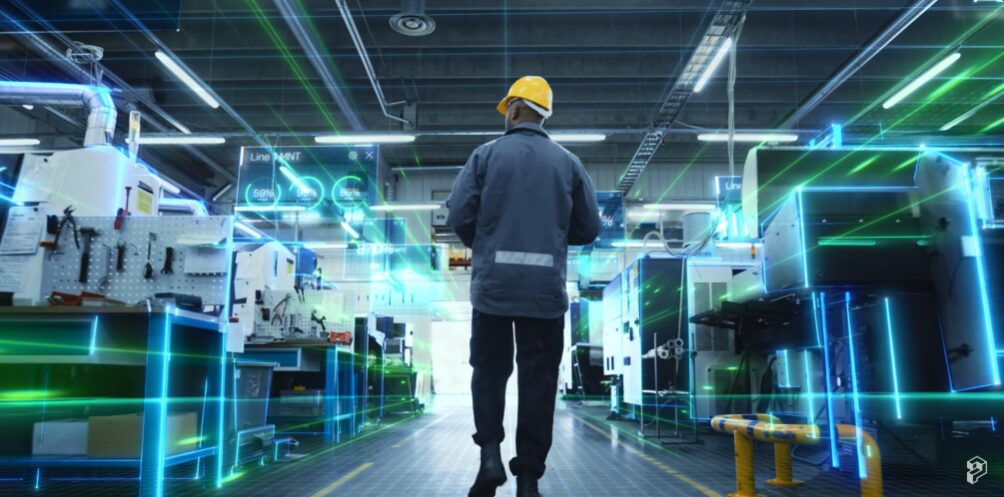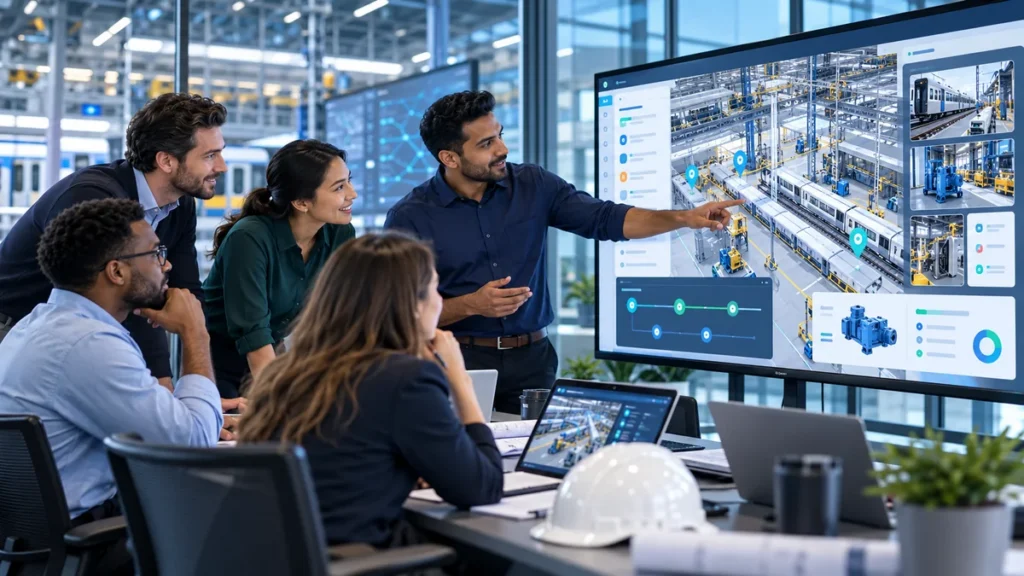

For decades, the industrial world has operated on a quiet assumption: that the digital model is close enough to the real thing. CAD files. Engineering drawings. BIM models built from scratch, layer by layer, over weeks or months.
Close enough, until it isn’t.
Until a brownfield modification doesn’t survive first contact with the actual facility. Until a maintenance window runs long because an issue that could have been caught virtually gets discovered on-site, with crews mobilized and production stopped. Until a decision made with confidence in a boardroom turns out to have been made three steps removed from the source.
This is the as-built gap. And it is costing industrial organizations far more than most have calculated.
CAD models are great, but they won’t have all the details you need to make decisions.
Michel Besner has been watching this problem compound across industries for years. As CEO of Prevu3D, he’s direct about what’s at the root of it.
The challenge for today’s designers, engineers, and owner-operators is that CAD files and drawings can never truly be the source of truth—they always lack the details of the real world. A world which frequently changes, has defects and imperfections, none of which exists in the computer model.
The deeper issue, he argues, isn’t a data problem. It’s a trust problem.
These models can take weeks to build, and by the time they’re done, reality has already moved on. What’s often overlooked is that the CAD data was originally derived from scans of the physical world. The industry has always had access to reality. It just hasn’t had a way to work directly from the one source it can actually trust.
The first era of reality capture (laser scanning, photogrammetry, cloud-native visualization) solved a real problem. It made the as-built world accessible.
Engineers in Houston could walk through a facility in Rotterdam without booking a flight. Scan programs scaled across sites and business units.
But somewhere along the way, accessible became the finish line. Platforms competed on rendering quality. On storage efficiency. On how fast a point cloud could stream to a browser. The scan became the product.
It isn’t anymore.
From Point Cloud to Working Environment
Jason Brynford-Jones, Chief Product Officer at Prevu3D, is clear about where most spatial tools fall short.
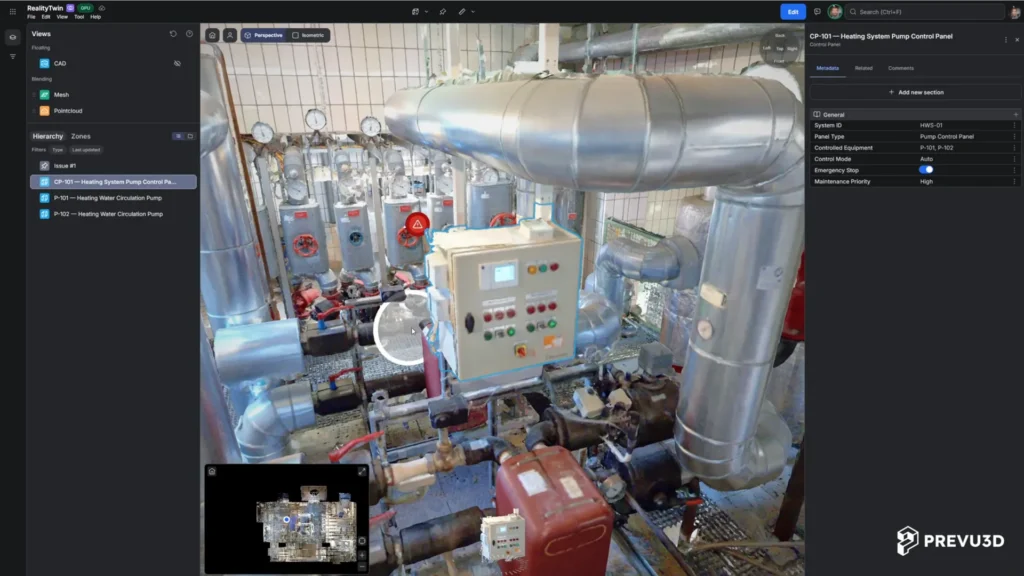
Most spatial tools give you a point cloud and stop there. That’s a starting point, not a working environment.
The distinction matters enormously in practice. A point cloud is a photograph of a facility. An asset-based environment is a living record, one where every piece of equipment has an identity, a location, and a history.
When something changes, you know what changed, where it is, and what it connects to. It’s the difference between a photograph of a facility and a living record of assets that must connect everywhere.
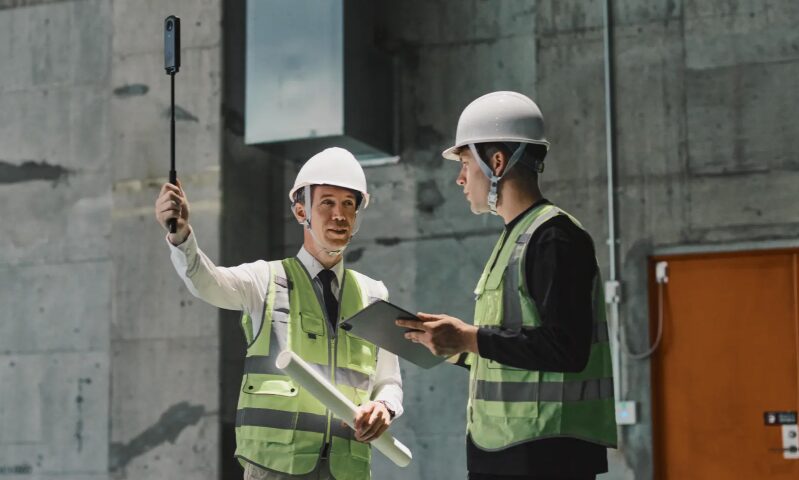
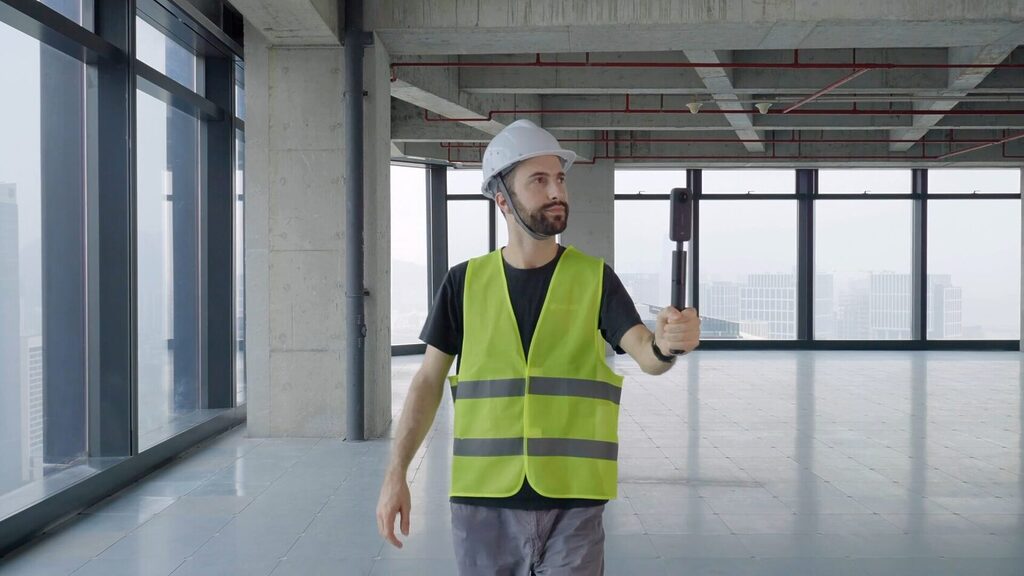
Prevu3D ingests from terrestrial LiDAR, handheld SLAM scanners, drone footage, and 360° video, and critically, it combines them. Different sources, different times, different scales, all coming together into one usable 3D environment.
“The as-built is never a snapshot,” Brynford-Jones says. “It’s a living record that has to be managed.”
That living record then flows directly into the tools where decisions actually get made — CAD environments like Siemens NX and Autodesk Revit, streaming in real time, available inside customers’ existing workflows.
“Reality is the baseline on day one. But with Prevu3D, decisions no longer have to wait. We can take reality capture from anywhere and deliver it everywhere.”
The Role of AI: Turning Fragments into Truth
None of this works at industrial scale without AI. Kevin Ouellet, CTO of Prevu3D, explains why the platform was built around it from the ground up, not bolted on after the fact.
AI isn’t an add-on to Prevu3D—it’s what makes the platform useful at scale. Capture data arrives from everywhere, often in fragments. With AI, we turn those fragments into clean geometry, usable assets with attached semantics, and a change history that tracks reality over time.
That transformation, from raw scan data to something engineers and autonomous systems can actually rely on, is what separates operational infrastructure from a viewer.
The implications extend well beyond engineering workflows. As physical AI accelerates, the demand for environments that autonomous systems can actually learn from is growing fast. And a CAD model, Ouellet argues, simply cannot serve that purpose.
A robot operating in an industrial facility doesn’t learn from theoretical models, it learns from what it will actually encounter. A CAD model doesn’t reflect changes, moved objects, or the complex surface interactions a sensor hits in the real world. To train autonomous systems, you need a true as-built environment, not an assumption.
The roadmap reflects this. Continuous learning pipelines. Change detection. Models that adapt without ever breaking traceability.
“The physical world never stops changing. Neither will we.”
The Cost of the Gap and What Closes It
The organizations that have started closing the as-built gap are finding the results go beyond efficiency. They’re foundational.
An engineering firm that once spent 60 hours manually reconstructing a wall in Revit now generates an accurate as-built model in 2 hours and imports it as native, editable components. A turbomachinery services team documented a 75% reduction in downtime duration after moving pre-installation work into a virtual environment.
An oil and gas operator discovered a third option for equipment placement, one that saved nearly $3 million in capital expenditure and 14 weeks of project schedule, because the platform let them iterate on scenarios in days rather than commission months of modeling work.
These aren’t exceptional outcomes. They become routine when the decision gap closes.
What the next platform looks like is already clear: it integrates directly into engineering environments, enables decisions before construction begins, works across the full asset lifecycle, and scales without creating new complexity.
The distinction, as Besner frames it, is the difference between a library and a power grid.
When reality data lives in a viewer, it answers questions for people who know how to go looking. When it becomes infrastructure—embedded in engineering environments, connected to maintenance systems, integrated with the tools teams already use—it starts driving decisions before anyone has to ask.
The as-built gap is not a technology problem waiting to be solved. The technology exists. The question is whether industrial organizations are positioned to capture its value or to keep funding the rework that comes from working from assumptions.
Prevu3D is the operational as-built platform for industrial teams. It turns reality capture data into connected 3D environments that engineering, operations, and compliance teams can act on from anywhere.